seminars
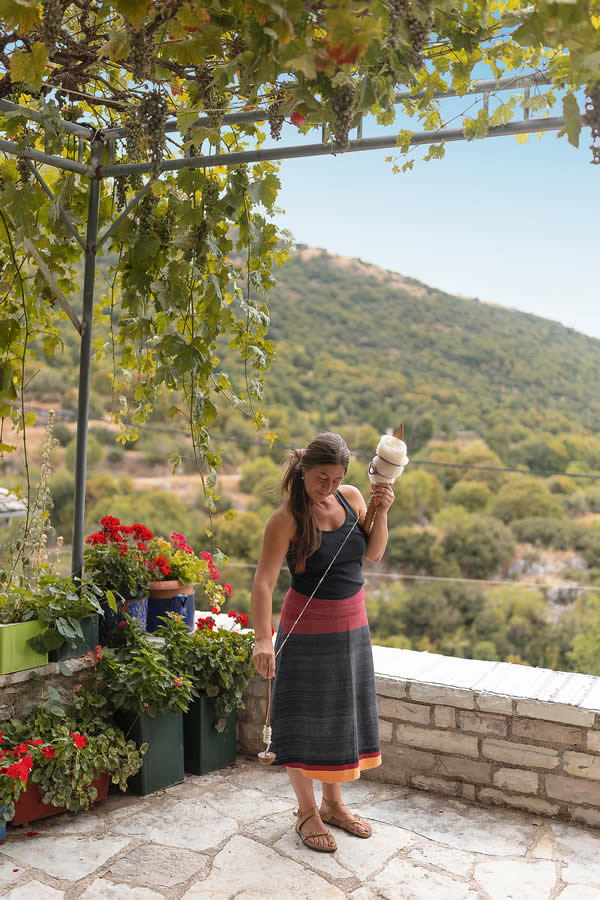
Craftsmanship, Elevated: Forget crowded classrooms. The Pokari Project offers an intimate, high-quality learning environment where you can truly master the art of wool and traditional crafts.
Our small group seminars are designed for personalized mastery. By strictly limiting participant numbers, we ensure every student receives dedicated attention, guaranteeing a deep, unique, and invaluable educational experience.
Invest in yourself: Explore the ancient roots of natural materials and create something extraordinary.
NUMBER OF PARTICIPANTS PER SEMINAR
- Felting, 1-8 participants
- Weaving, 1-3 participants
- Natural wool dyeing, 1-8 participants
FELT
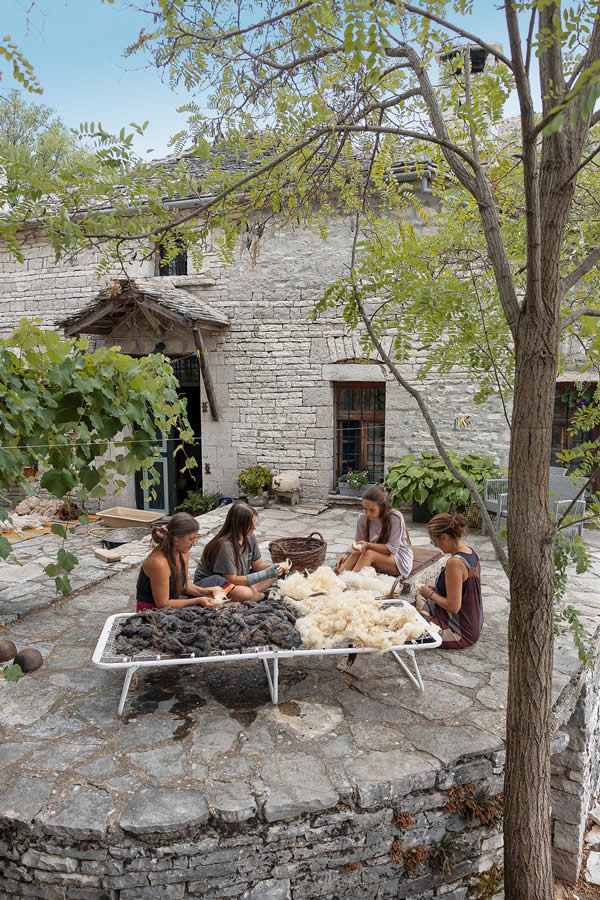
Felt is a unique fabric created exclusively from sheep’s wool. Its magic lies in its simplicity: you need no tools, just your hands and water!
This incredible process is possible thanks to the wool’s natural structure. Under a microscope, sheep’s fibers are covered in microscopic scales (unlike smooth goat hair). When you apply water and friction, these scales lock together permanently—creating a strong, beautiful textile.
Come discover this natural chemistry and learn to create with the power of nature and your hands!
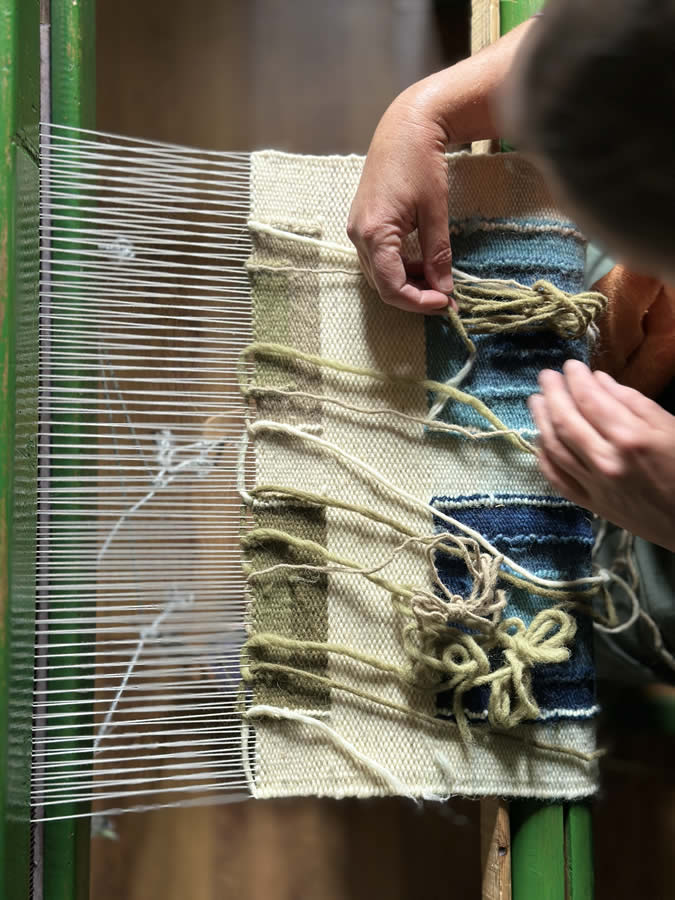
WEAVING
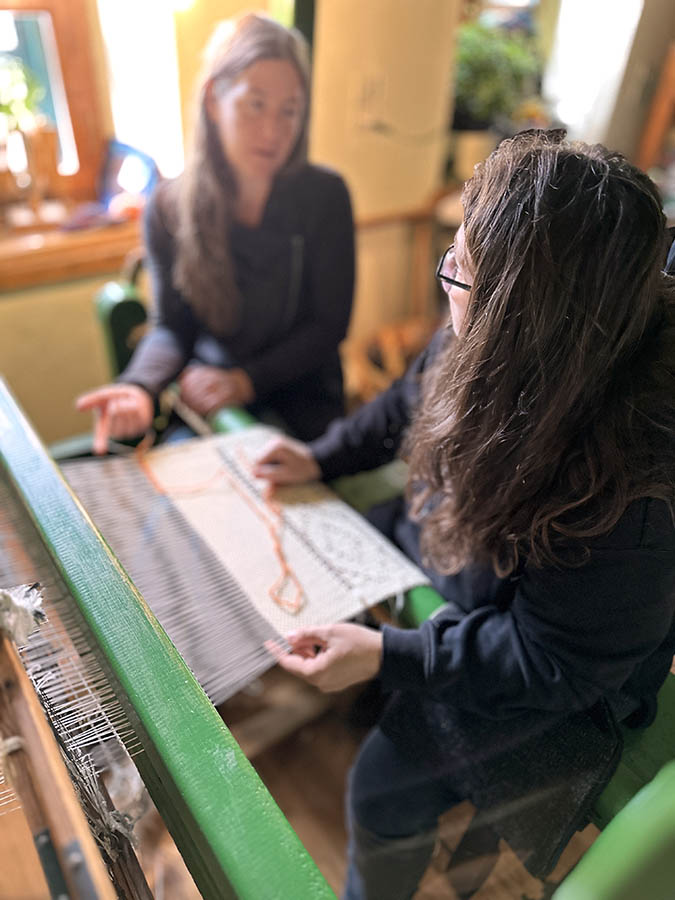
Weaving Made Easy: Learn with Pokari!
Want to learn how to weave? The Pokari Project offers complete, interactive seminars.
We focus on the preparation of the loom—the most difficult part of weaving—showing you exactly how to:
Set up the thread (warp).
Tie the knots.
Pass the thread through the comb.
The actual weaving is easy! With expert help, you can finish your own piece in just a few hours.
For Beginners: We recommend rag weaving (κουρελού). It gives the quickest and most satisfying results!
You’ll quickly learn the skills to weave with rag or wool.
NATURAL DYEING, CAPTURING THE COLOURS OF EARTH
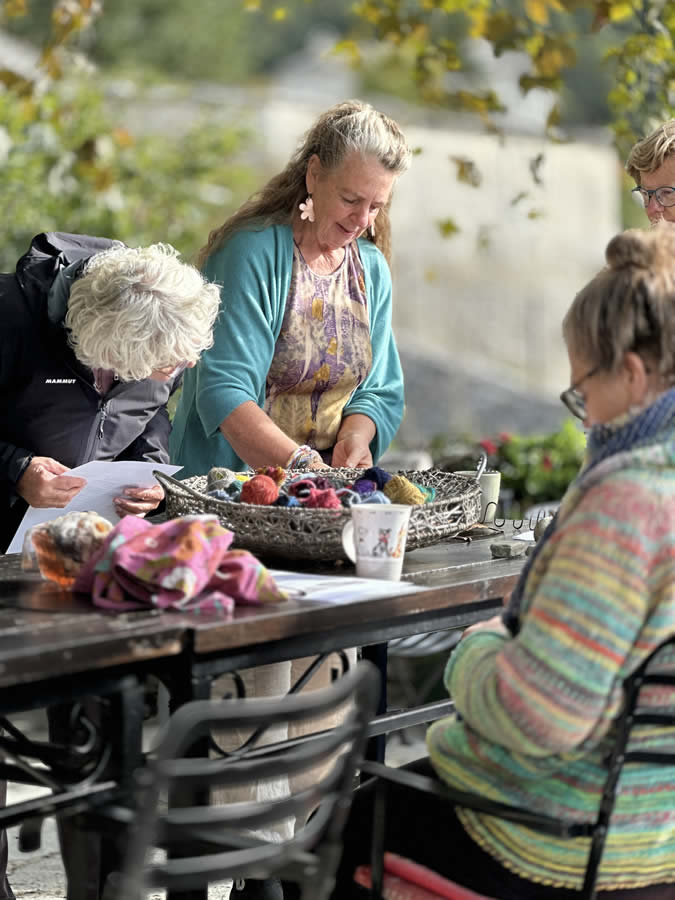
Learn the ancient technique of dyeing sheep’s wool using only plants, roots, and fruits from nature. The process follows the seasons:
We start with a walk to collect materials (leaves in spring, flowers/fruits in summer, roots/bark in autumn).
We boil the plants to extract the color.
We add the prepared wool.
This technique involves a lot of improvisation—there are few rules!
The most exciting part? The final color is always a surprise, usually a delightful one! Come see how the earth paints the wool.